Decide Smarter.
Start Today
Popular Articles

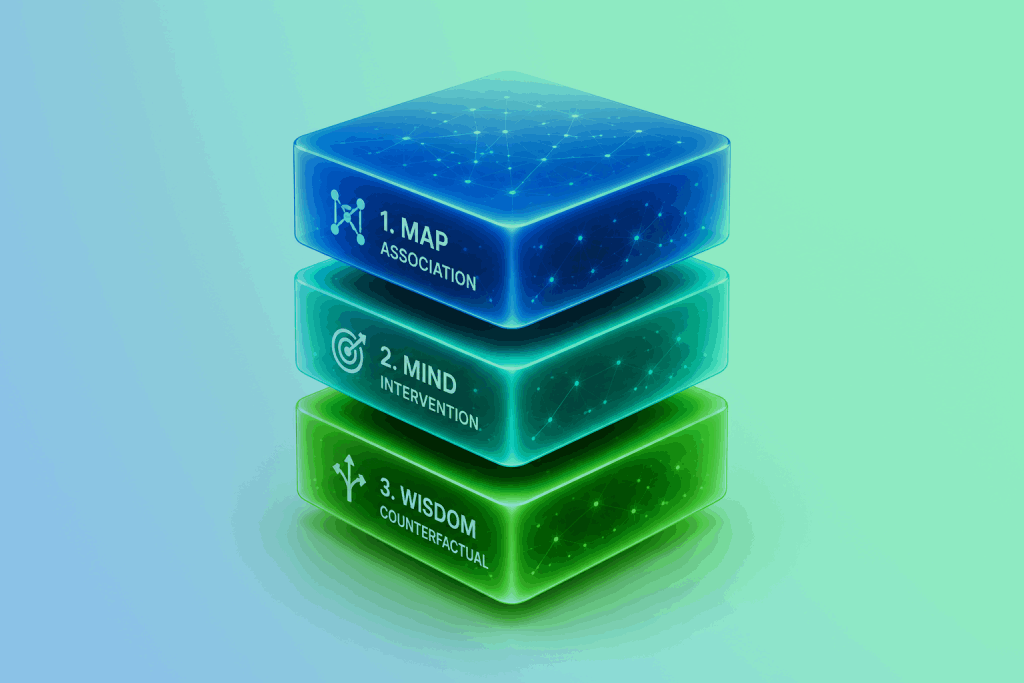

![Decision AI: Modern Decision Intelligence Stack [Part 2 of 2]](https://cdn.prod.website-files.com/69079d5bc1a99349b566161a/69b293b82dc44eb19c6ba0d7_thumbnail%20short%202.png)
.png)
.png)
.png)
.png)
.png)
Before we talk about the bottleneck, it helps to ground two simple ideas that shape how modern teams think:
An AI Analyst is software that reads data, keeps context, and explains why numbers shift with the clarity of a seasoned analyst.
A Decision Intelligence Platform connects goals, metrics, logic, and relationships so decisions improve over time instead of resetting with every meeting.
With that frame, here is the world decision-makers are living in today.
Every moment is shaped by a decision, what to build, where to focus, how to grow. And yet, across boardrooms and browsers, one paradox defines our time: we know more than ever, but still struggle to decide quickly and well. We make choices faster than we understand them, or slower than the world moves.
The result is a perpetual trade-off between speed and quality of decision-making. That imbalance has become the silent tax on human and organizational potential.
The Three-Headed Problem
1. Spreadsheet hell killed productivity. Analysts spend hours wrangling data, building pivot tables, and reconciling numbers across systems. By the time insights emerge, the moment has passed.
2. LLMs can't count. Today's AI can write eloquently about your data but fails at basic mathematical reasoning. Ask it to correlate revenue with marketing spend, and you get confident hallucinations, not reliable answers.
3. BI tools lack contextual ontology. Dashboards show what happened, not why it matters. They can't connect "Q3 revenue dropped 12%" to "because enterprise sales cycles lengthened after the product pivot in June." Context breaks. Understanding doesn't scale.
The world doesn't lack intelligence. It lacks connected intelligence, the capacity for thought that flows, links, and learns across every decision cycle.
Where Traditional Tools Break Down
Here is a quick view of why teams fall into the bottleneck even with mature tools:
This is the gap that produces the daily drag: too many systems, none that explain the story behind the numbers.
Industry reports reinforce this. Many teams spend 60–80 percent of their week preparing data instead of interpreting it. Surveys show that fewer than 35 percent of employees open BI dashboards weekly. And evaluations of large models indicate recurring failures in multi-step numeric reasoning, especially when business data spans multiple files.
The bottleneck isn’t data.
It’s the distance between data and understanding.
A New Kind of Intelligence
For the first time, technology can do more than calculate or report. It can understand context, reason through complexity, and learn from every decision.
Imagine an intelligence that helps you see the pattern behind performance, weigh trade-offs with clarity, and learn from outcomes so the next decision lands sharper. Not an AI that replaces judgment but one that thinks with you.
That belief gave birth to DecisionX.
The Architecture of Decision Intelligence
We’ve spent the last year building a missing layer in how organizations think. Four foundational pillars:
1. Context Intelligence
DecisionX builds a living map of goals, metrics, teams, and narratives. It sees meaning in the way terms shift across roles. A phrase like “pipeline velocity” means one thing on a board slide and another inside sales ops. DecisionX keeps the difference straight.
2. Deep Reasoning
Decisions deserve logic. DecisionX runs correlations, traces causality, checks assumptions, and connects numeric and narrative signals. It explains why something happened and what may happen next.
3. Holistic Intelligence
Reality spans CRMs, dashboards, spreadsheets, and slide decks. DecisionX reads across them, seeing patterns that appear only when everything connects. It is the difference between knowing “sales are down” and realizing “enterprise deals slowed because the pricing change confused champions.”
4. Continuous Learning
Every decision leaves a trace. DecisionX learns from those traces: context, choices, outcomes. So intelligence compounds instead of resetting with each new analyst or reorg.
These pillars work together inside a decision intelligence platform that grows sharper every day.
A Simple Example of the Bottleneck in Practice
Picture a leadership meeting where someone asks:
“Why did enterprise revenue slow in Q3?”
A dashboard tells you what happened.
A spreadsheet tells you where it happened.
A language model writes about what happened.
DecisionX ties the signals together:
- The product pivot in June shifted qualification criteria
- Sales cycles lengthened because champions needed new approvals
- A pricing change confused mid-funnel deals
- Marketing’s message still reflected the old model
Instead of five tools and three meetings, you get one clear line of reasoning.
This is where deep reasoning and context intelligence meet.
What Becomes Possible
Imagine a world where:
- Every decision-maker has full context in real time
- Strategy flows through every level, not just leadership
- Every analysis becomes the foundation for the next
- Work that took days now happens in seconds without losing depth
That is the shift from decision bottlenecks to Decision Velocity, where speed and depth reinforce each other instead of competing.
The Era of Decision AI
AI that automates was yesterday.
AI that analyzes is today.
AI that reasons, learns, and decides alongside you is tomorrow.
DecisionX builds for that tomorrow — where systems understand human context, insight becomes foresight, and decisions evolve instead of react.


Ranjan Kumar, Founder & CEO, DecisionX
Ranjan Kumar is the Founder and CEO of DecisionX AI, the world’s first self-learning, context-aware Decision Intelligence platform that enables enterprises to make smarter, faster business decisions through agentic AI. A serial entrepreneur and three-time founder with over 17 years of experience, Ranjan previously built Entropik, the world’s first Emotion AI platform with 17 global patent claims. An IIT Kharagpur alumnus, he is widely recognized as a thought leader in enterprise AI, Ontology Engineering, decision reasoning, and AI-driven business transformation.